


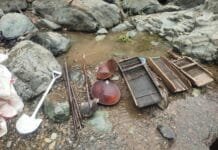
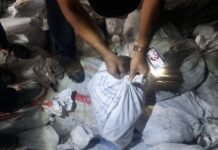







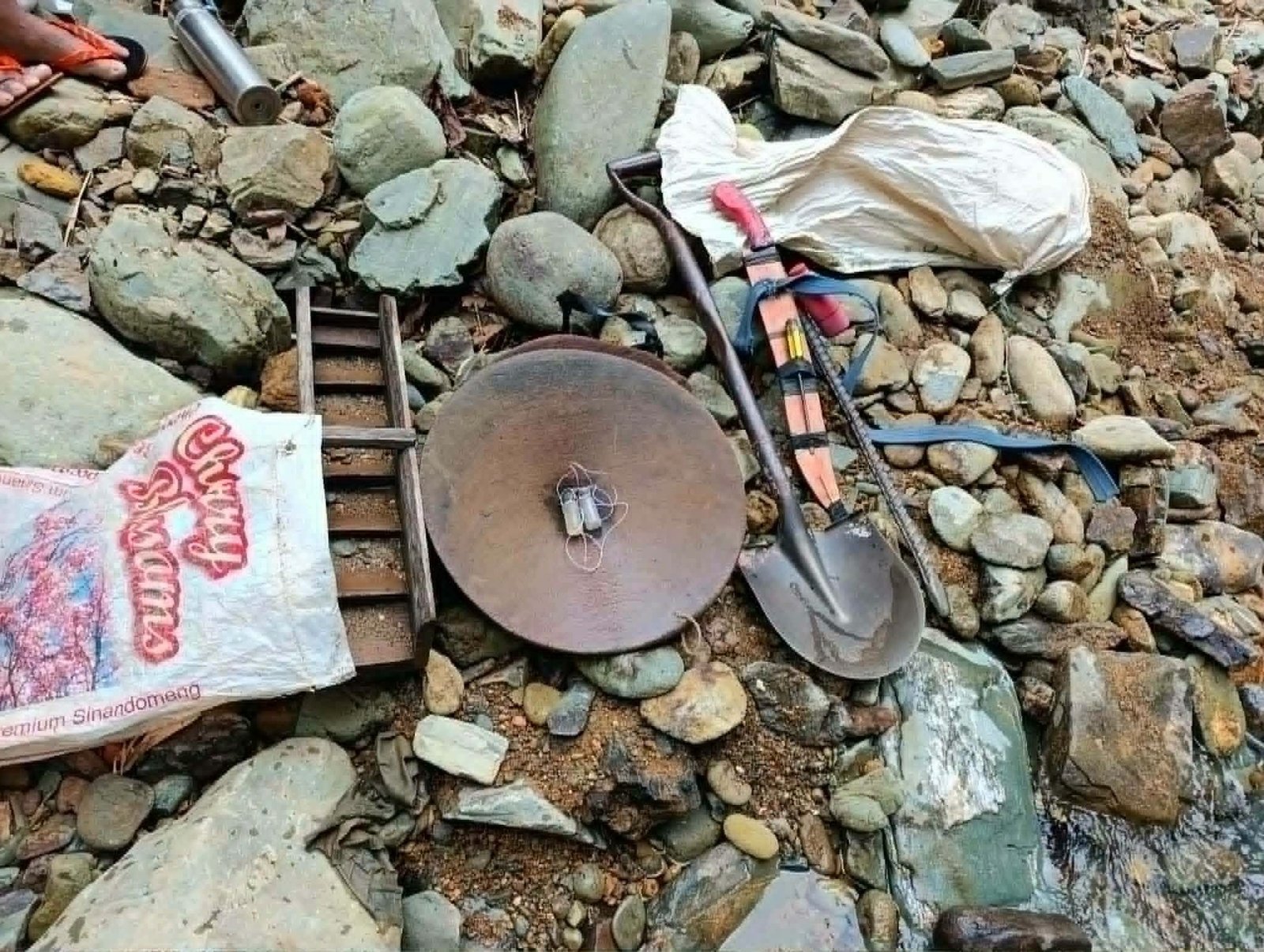
The reported ₱100,000 worth of gold being extracted and sold every week in San Andres or Obi, Caramoran, Catanduanes is not merely a story about gold. It is a story about poverty, governance, law enforcement, environmental protection, livelihood—and a system that must now ask some uncomfortable questions. If the information is eventually confirmed by authorities, how did a mining operation that reportedly started almost a year ago grow from a small activity into one involving nearly 100 people and producing gold reportedly worth around ₱100,000 every week? Paano ito lumaki nang ganito, at bakit ngayon lamang naging malaking usapin?
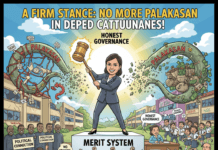
The question is not meant to condemn Governor Patrick Alain T. Azanza, the PNP, PENRO, municipal officials or barangay officials. It is a legitimate question of public governance. Governor Azanza has made it clear since the beginning of his administration that illegal activities, including illegal mining and quarrying, will not be tolerated. The PNP has likewise been directed to strengthen its campaign against illegal activities. But a policy becomes meaningful only when it reaches the remotest sitios, forests and mountains. Hindi sapat ang magandang direktiba kung hindi ito nakararating sa ground.
The tragedy in Macacaw makes the issue even more urgent. On the night of July 27, 2026, 23-year-old Michael Jay San Juan reportedly died after being buried by collapsing soil while digging in a large hole in an area known as “Macacaw,” a rugged and forested portion of Barangay San Isidro, San Andres. Another miner, Marlon Collantes Buenavente, 38, was injured after being partially buried, while his 16-year-old son reportedly helped rescue his father and sought assistance. One young life was lost, another was injured, and a minor was placed in a dangerous rescue situation. Hindi lamang ito usapin ng illegal mining; ito ay usapin ng buhay ng tao.
This tragedy should force government to look beyond the accident itself. The Philippine National Police should investigate not only the circumstances surrounding San Juan’s death but also the broader operation allegedly existing in the area. Who organized the activity? Who supplied the equipment? Who transported the workers and materials? Who knew about the operation? Were there previous reports or complaints? Where was the extracted gold brought? Who bought it? And, perhaps most importantly, who financed or benefited from the operation, if there was such financing?
PENRO and DENR likewise have an important responsibility. Under the Philippine Mining Act of 1995, Republic Act No. 7942, mineral resources are owned by the State and their exploration, development and utilization are subject to government regulation. Small-scale mining is also regulated under Republic Act No. 7076, the People’s Small-Scale Mining Act of 1991. Small-scale mining is not a legal license simply because it is small, because the miners are poor, or because gold exists beneath the land. There are legal requirements, designated areas, permits, environmental safeguards and government supervision. Ang “small-scale” ay hindi ibig sabihin na “anything goes.”
Executive Order No. 79 further strengthened government policy on responsible mining and provided that small-scale mining operations must comply with applicable laws and regulations, including the requirement that small-scale mining be undertaken within duly declared Minahang Bayan areas, subject to the law. The authorities therefore need to establish one fundamental fact: Is the San Andres site legally authorized for mining? If it is not, government must explain why an alleged operation could continue for so long and become so large.
There is another important dimension that must not be ignored: poverty.
It is easy to say, “Ipahinto ang illegal mining.” And yes, if the operation is illegal and dangerous, it must be stopped. But government must also ask: What happens to the people when the mining stops?
Many of the people entering dangerous mining areas may simply be looking for a way to survive. The reported miners include individuals whose ordinary livelihood is abaca stripping. For a poor worker, an opportunity to earn several thousand pesos from gold may appear far more attractive than a difficult agricultural livelihood that provides uncertain income. Hindi ibig sabihin na tama ang illegal mining dahil mahirap ang buhay. Pero dapat maintindihan ng gobyerno kung bakit napipilitan o nahihikayat ang mga tao na pumasok dito.
This is where governance must become more intelligent.
Enforcement alone will not solve the problem.
If government closes the mining site today, sends the miners home tomorrow, but gives them no alternative livelihood, what prevents them from returning to another mountain? What prevents another illegal mining operation from appearing in another barangay six months from now?
Kailangang sabayan ng livelihood ang enforcement.
The provincial government, together with the municipality of San Andres and the barangays concerned, should identify the miners and their families and determine what legitimate economic opportunities can be created for them. Those who are already skilled in abaca stripping, for example, can be organized into cooperatives and assisted toward higher-value abaca processing, fiber improvement and market-linked enterprises. Others can be trained in agriculture, livestock, construction, equipment operation, fisheries where appropriate, eco-tourism, food processing and other viable local industries.
TESDA, DTI, DA, DOLE, DSWD and DENR can be brought into a coordinated livelihood transition program. The province can provide or facilitate training, starter tools, cooperative formation, market access and temporary assistance. Hindi sapat na sabihin sa isang mahirap na pamilya na “huwag kang magmina.” Kailangang may maibigay na sagot sa tanong na: “Kung hindi ako magmimina, saan ko kukunin ang pagkain ng pamilya ko?”
This is also consistent with the broader general welfare mandate of local governments under Republic Act No. 7160, the Local Government Code, which encompasses the promotion of health and safety, ecological balance, economic prosperity, social justice and livelihood opportunities. The law should not be viewed merely as an instrument for regulation and punishment. It is also a framework for creating conditions in which people do not have to choose between poverty and illegal activities.
The environmental issue is equally serious.
Gold may disappear from the ground, but environmental damage can remain for generations. Unregulated excavation can destabilize slopes, increase erosion, damage forests, affect waterways and endanger communities. The collapse that reportedly killed San Juan is already a warning that the physical danger is not theoretical. May namatay na. The mountain has already given its warning.
The government must therefore determine the exact environmental and legal status of the Macacaw area. PENRO and DENR should conduct a proper field assessment, establish the boundaries and coordinates of the area, determine its land and forest classification, verify whether it is within a protected or environmentally sensitive area, and assess the environmental damage, if any. Where applicable, the Environmental Impact Statement System under Presidential Decree No. 1586 and other environmental regulations must be considered.
The Sangguniang Panlalawigan is therefore correct to call the attention of the PNP and PENRO. But the oversight should not stop with a resolution or a request for investigation. The people deserve a report on what happens next. They deserve to know whether an investigation was conducted, whether violations were established, whether charges were filed where warranted, whether the site was closed, whether environmental rehabilitation was ordered, and whether affected families were provided with alternative livelihood.
The PNP, for its part, must follow the evidence. If there are violations, those responsible should be prosecuted according to law. But enforcement must distinguish between the impoverished worker at the bottom of the chain and individuals who may be organizing, financing or profiting from a larger operation. Huwag lamang ang pinakamadaling hulihin ang habulin.
If the reported ₱100,000 weekly gold sales are confirmed, investigators should follow the money. The question should not end with the person holding a shovel. Authorities should examine the supply chain—from equipment and transportation to gold buyers and financial transactions. If there are financiers or organized operators, evidence should establish their role. If there are legitimate gold buyers, their transactions should comply with applicable laws. If there are violations, they should be addressed through lawful procedures.
At the same time, government must avoid trial by rumor. Several names have reportedly surfaced in connection with people allegedly visiting or moving around the mining area. A name being mentioned is not proof of guilt. No individual should be publicly branded a financier, operator or criminal without evidence and due process. The investigation must be based on documents, sworn statements, physical evidence, financial records and other competent evidence—not gossip or political speculation.
The reported presence of military personnel after the miner’s death should likewise be understood through the facts. Security and monitoring may be necessary in a remote and potentially dangerous area, but government agencies should clearly explain their respective mandates and roles. Transparency prevents unnecessary speculation and assures the public that every agency is acting within the law.
Perhaps the biggest question is not simply, “Why is there illegal mining in San Andres?” The deeper question is, “Why did people find it profitable and necessary enough to risk their lives doing it?”
That question leads us back to poverty.
Catanduanes cannot fight illegal mining successfully if it only treats the symptom. The province must also address the economic conditions that make illegal activities attractive. Kapag walang trabaho, mababa ang kita, mahal ang bilihin at walang malinaw na livelihood opportunity, natural na hahanap ang tao ng ibang paraan para mabuhay.
That does not excuse illegal mining.
It explains why prevention must include development.
The provincial government should therefore consider creating a Mining-to-Livelihood Transition Program for displaced miners and affected communities. The program should not simply distribute one-time assistance. It should provide skills training, livelihood capital, cooperative development, market linkage and continuing monitoring. The goal should be sustainable income—not temporary relief.
The barangay governments also have a crucial role. Barangay officials are often the first to know when unusual activities begin in their communities. Rather than simply asking them why they failed to report, government should build a formal community-based environmental monitoring mechanism where residents can safely report suspected illegal mining, forest destruction and dangerous excavation. The community should become government’s partner, not merely its informant.
And this is where the campaign against illegal activities must evolve.
A successful anti-illegal-mining campaign should not be measured only by arrests.
It should be measured by prevention, detection, enforcement, rehabilitation and livelihood replacement.
The real success is when illegal mining does not return because people have legitimate ways to earn.
The real success is when a barangay can report suspicious activity before it becomes a 100-person operation.
The real success is when government agencies share information instead of working in separate silos.
And the real success is when no family has to choose between hunger and a dangerous hole in the ground.
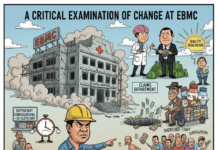
Governor Azanza’s declaration against illegal activities is a necessary starting point. But the San Andres controversy presents an opportunity to turn that declaration into a stronger system of governance. The governor cannot personally monitor every mountain, the PNP cannot see every sitio, and PENRO cannot be everywhere at the same time. That is why the system must work—from province to municipality, from municipality to barangay, and from government to community.
If an illegal mining operation really operated for nearly a year and grew to such a scale, government should not simply ask, “Who is responsible?”
It should also ask:
“Where did our monitoring system fail?”
And then fix it.
The death of Michael Jay San Juan should not become another statistic.
His death should be a wake-up call.
It should remind Catanduanes that natural resources are not simply commodities to be extracted, and poor workers are not expendable hands in the search for gold.
There is gold beneath the mountain, perhaps. But there is also a human story beneath the gold—poverty, desperation, opportunity, risk and survival.
Government’s responsibility is to protect both the mountain and the people.
Ipahinto ang illegal mining kung ito ay mapatunayang illegal. Imbestigahan ang buong operasyon. Panagutin ang dapat managot. Protektahan ang kalikasan. At higit sa lahat, bigyan ng tunay na alternatibo ang mga taong mawawalan ng kabuhayan.
Because if government waits until another mountain collapses, another worker dies, another family loses its breadwinner, and another illegal operation becomes entrenched, then the question will no longer be why illegal mining happened.
The question will be:
Why did we allow it to happen again?