


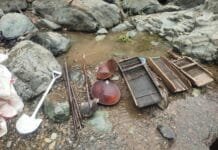
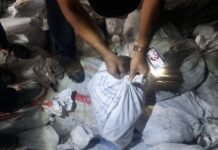


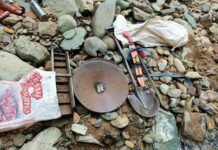





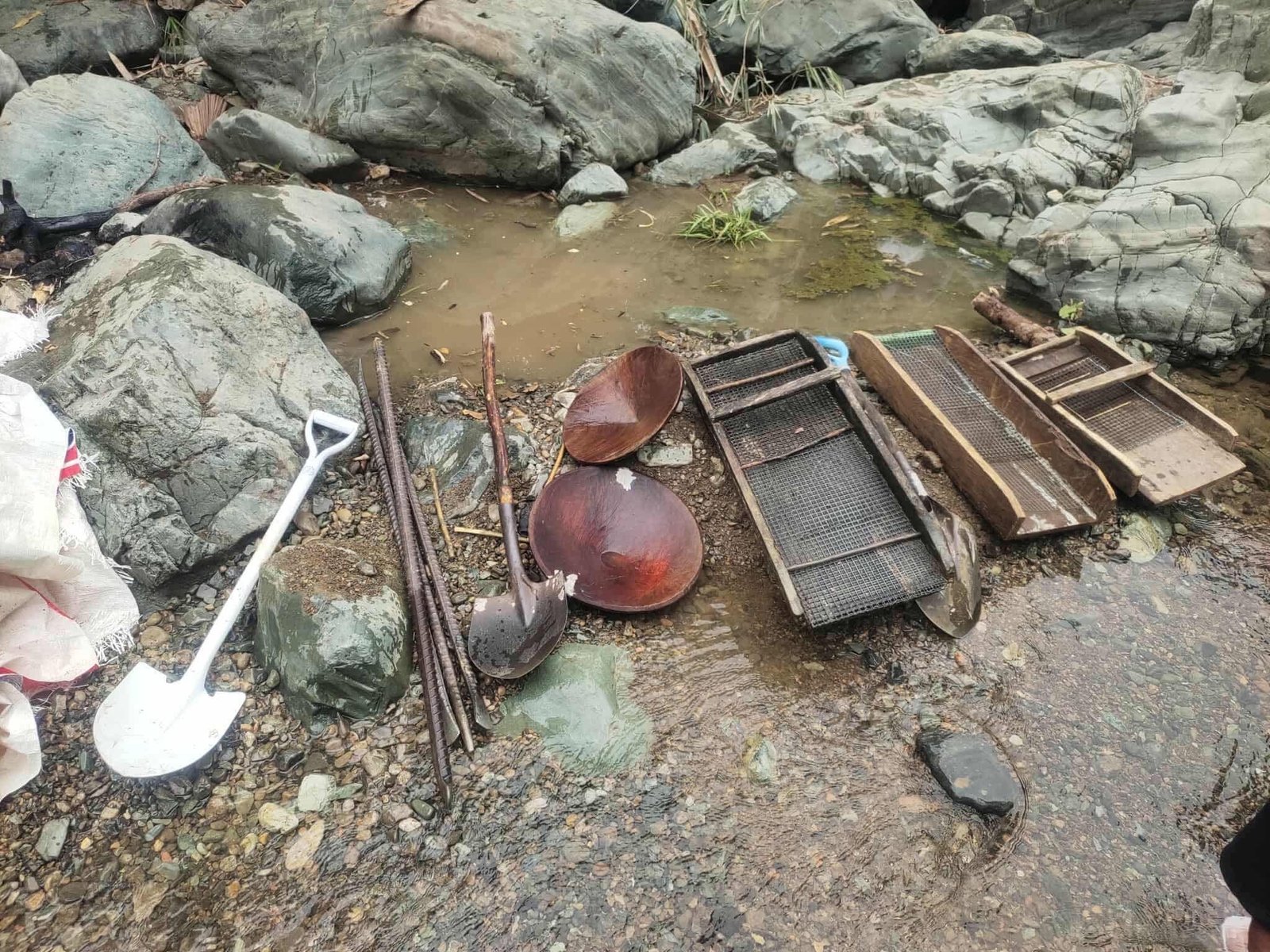
SAN ANDRES, Catanduanes — As much as ₱100,000 worth of gold is reportedly being recovered and sold every week from a controversial mining operation in a remote area between San Andres and Caramoran, an operation reportedly ongoing for nearly a year that has grown from a small-scale activity to one involving an estimated 100 people working or moving in the area.
Based on information gathered by Bicol Peryodiko, the amount of gold recovered from the site could reportedly exceed one kilogram per week, with the extracted minerals allegedly transported to Virac for sale. Information also indicated that some gold buyers may be paying as much as ₱6,500 per gram, although these figures still need to be verified by the PNP, PENRO, and other concerned government agencies.
The alleged mining activity came under greater scrutiny following the death of 23-year-old Michael Jay San Juan on the evening of July 27, 2026, when he was reportedly buried by a collapsing earth formation while digging at “Macacaw,” a dense and forested area within Barangay San Isidro, San Andres.
According to the initial police investigation, San Juan’s entire body was buried when a large hole they were digging suddenly collapsed, resulting in his immediate death. San Juan, an abaca stripper and resident of Barangay Datag East, Caramoran, had a live-in partner.
Also injured was 38-year-old Marlon Collantes Buenavente, a married abaca stripper from Barangay Obi, Caramoran. He was partially buried, with only his head remaining above the soil, before being rescued by his companions. His 16-year-old son, a Grade 9 student, also managed to escape, assisted his father, and sought help that led to the rescue operation.
Following the incident, the Philippine National Police (PNP) launched an investigation not only into the cause of San Juan’s death but also into the circumstances surrounding the alleged mining operation. Military personnel were likewise reported to have arrived in the area after the incident as part of security and monitoring efforts.
Meanwhile, the Sangguniang Panlalawigan has taken notice of the reported mining activity and called on the PNP and the Provincial Environment and Natural Resources Office (PENRO) to strengthen the investigation. Among the issues that need to be clarified are whether the operation has the required permits, who is operating it, how extensive it has become, and whether individuals or groups are providing financing, equipment, or other forms of support.
Sources said that those reportedly traveling to the area are not limited to residents of San Andres. Some miners allegedly came from other parts of Catanduanes after information about the presence of gold circulated. Over time, the number of people reportedly digging and engaging in other activities in the mining area gradually increased.
One of the areas identified in information submitted to Bicol Peryodiko is Macacaw in Barangay San Isidro, where the July 27 incident occurred. Because the area is dense and difficult to access, regular monitoring and enforcement pose challenges for authorities.
The reported mining activity has also renewed attention on the provincial government’s campaign against illegal activities. Since assuming office, Governor Patrick Alain T. Azanza has pursued a stricter campaign against illegal activities, including illegal mining and quarrying. In this context, investigators are expected to examine how the reported mining operation allegedly continued for nearly a year and how it was able to expand significantly.
Sectors calling for a deeper investigation are not seeking to identify only the miners physically working at the site. If the operation is found to be operating without the necessary permits, authorities may also need to examine the possible involvement of financiers, suppliers, transporters, and gold buyers who may be connected to the movement of gold from San Andres to Virac.
Several names have also surfaced in information submitted to Bicol Peryodiko concerning individuals reportedly seen traveling to or allegedly having connections to the area. However, the mention of their names does not mean that they are involved in illegal mining, and there is currently insufficient official evidence to identify them as operators, financiers, or participants. Any such allegations must first be established by the proper authorities.
If the report that ₱100,000 or more worth of gold is being sold every week is substantiated, authorities may need to investigate whether the operation extends beyond simple small-scale mining. It will also be important to establish the financial trail—where the gold goes, who purchases it, the actual value of the transactions, and who ultimately benefits from the operation.
For now, the public is awaiting the results of the PNP investigation and PENRO assessment concerning the mining operation and the death of San Juan. For those calling for stronger enforcement, the issue is no longer limited to the miners in the mountains but encompasses the entire operation—from extraction to the sale of gold.
The biggest questions now are: If the reported ₱100,000 worth of gold is indeed being sold every week from San Andres, who is buying it, who is profiting from it, and who is behind the operation?