










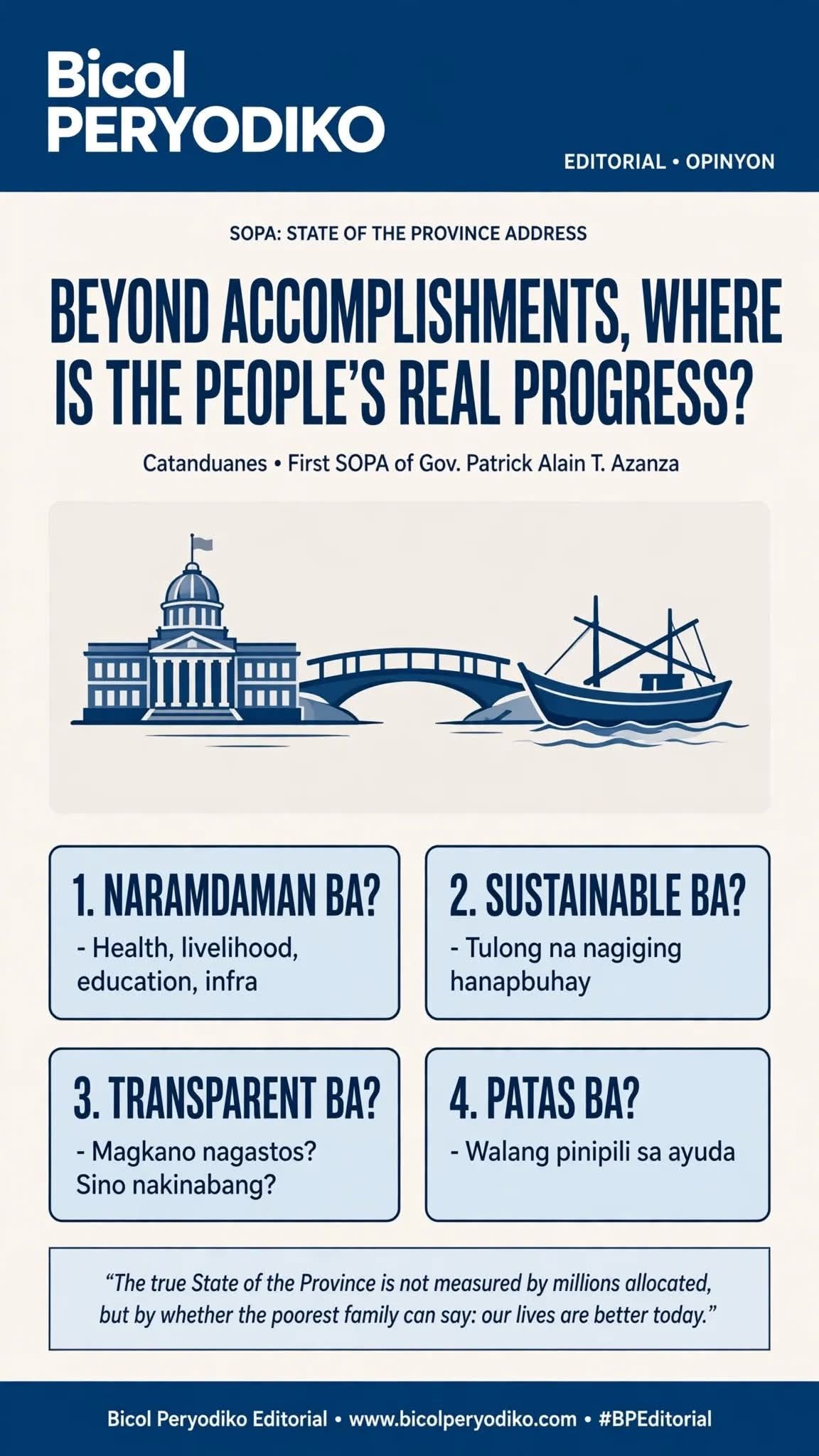
Governor Patrick Alain T. Azanza’s first State of the Province Address presents a promising picture of a new administration eager to establish its mark in Catanduanes politics. His emphasis on health care, livelihood, education, infrastructure, and services for neglected communities deserves recognition. The ₱30-million medicine allocation, abaca-buying program, scholarships, mobile health services, and disaster response initiatives are meaningful interventions. Yet, while the numbers are impressive, the bigger question remains: Have these programs significantly changed the lives of ordinary Catandunganons? A government must be judged not by the volume of its announcements but by the actual benefits its people receive.
For a province still struggling with poverty, declining agricultural production, unreliable electricity, costly transportation, and limited economic opportunities, the challenge is not simply introducing new programs but ensuring their sustainability. Livelihood assistance must create lasting income, scholarships must open doors to employment, and hospital expansion must translate into accessible and affordable treatment. The proposed Friendship Bridge, economic zones, and other major infrastructure projects may offer hope, but feasibility studies and investment announcements should not be mistaken for completed achievements. Catanduanes needs development that people can feel today, not merely promises of prosperity tomorrow.
Equally important is the need for transparency and accountability. The reported reduction in poverty, creation of jobs, and improvement in nutrition indicators are encouraging, but these figures must be supported by verifiable data, clear baselines, and measurable outcomes. How much of the allocated budget has actually been spent? Which municipalities and barangays have benefited? How many livelihood beneficiaries have become economically self-sufficient? Which projects have been completed, and which remain proposals? These are legitimate questions, not expressions of political opposition. A people-first administration must welcome scrutiny because public funds demand public accountability. Development must also be equitable, ensuring that political considerations never determine who receives government assistance and who gets left behind.
Azanza deserves credit for laying down an ambitious development agenda during his first year as governor, particularly as he navigates the demands of provincial leadership as a relatively new figure in Catanduanes politics. But the real test of leadership begins after the applause fades and the speeches end. His declaration to make the neglected visible and the forgotten heard must become a governing principle, not simply a memorable line in a public address. The province needs less political celebration and more measurable transformation; fewer announcements and more completed commitments. Ultimately, the true State of the Province is not measured by the governor’s presentation, the millions allocated, or the projects promised, but by whether the poorest farmer, the struggling fisherman, the ordinary worker, and the most underserved family can genuinely say: our lives are better today than they were yesterday.