


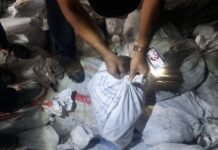










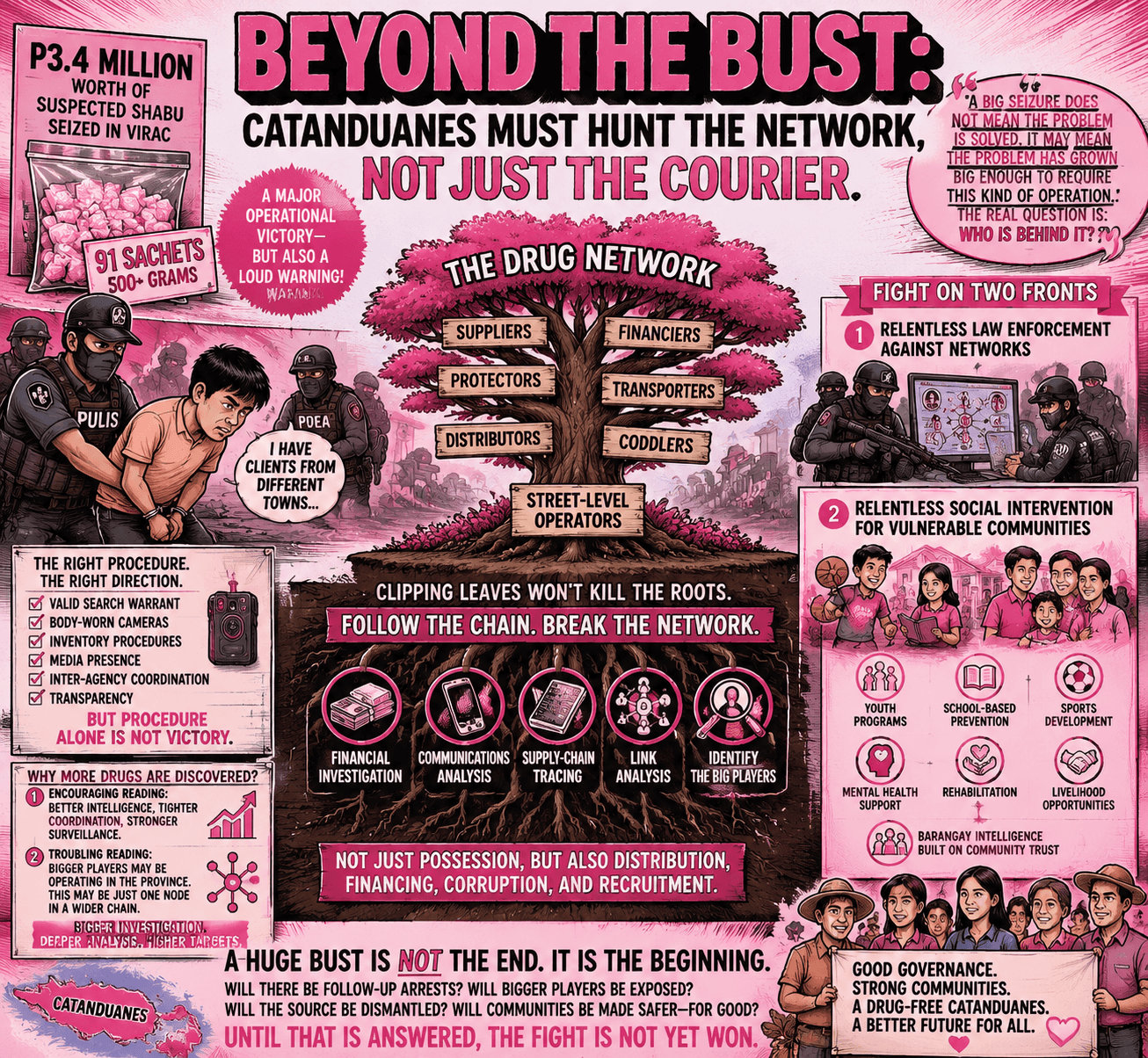
The recent seizure of an estimated P3.4 million worth of suspected shabu in Virac is both a victory and a warning. While authorities deserve recognition for the successful anti-drug operation, the incident exposes a painful reality: illegal drugs have already penetrated even small and supposedly peaceful provinces like Catanduanes. Operations, arrests, and confiscations may temporarily weaken drug networks, but they do not completely eradicate the problem. For every drug den that is dismantled, another may emerge if the social conditions that breed addiction and criminality remain unaddressed. The drug crisis is not merely a law enforcement issue—it is also a social, economic, and moral problem.
Government efforts must therefore go beyond aggressive police operations. The campaign against illegal drugs should not focus solely on punishing offenders but also on preventing people from entering the cycle of addiction in the first place. Poverty, unemployment, lack of education, broken families, and hopelessness continue to push many individuals toward illegal activities and substance abuse. As long as communities suffer from economic insecurity and limited opportunities, drug syndicates will continue to find vulnerable people to exploit. A sustainable solution requires stronger investments in education, job creation, youth development, and community empowerment.
Equally important is the need to strengthen rehabilitation and prevention programs. Many local governments still rely heavily on short-term awareness campaigns that rarely create lasting impact. What communities truly need are accessible rehabilitation centers, free mental health and counseling services, scholarship and sports programs for the youth, and livelihood assistance for struggling families. At the same time, authorities must intensify intelligence-driven operations targeting large-scale suppliers, financiers, and protectors of the drug trade. The fight against drugs cannot succeed if only street-level personalities are arrested while the masterminds continue operating behind the scenes.
Ultimately, the success of the anti-drug campaign should not be measured solely by the amount of shabu confiscated or the number of suspects arrested. Its true success lies in the number of lives saved, families restored, and communities protected from fear and addiction. Illegal drugs will not disappear through fear and force alone. They can only be defeated through good governance, genuine public service, and a government that gives its people hope, dignity, and opportunities for a better future. The real battle is not only against the drugs themselves, but against the conditions that allow them to thrive. | Editorial | Bicol Peryodiko