


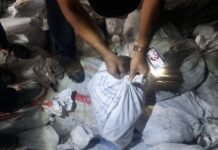


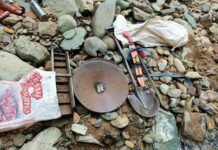





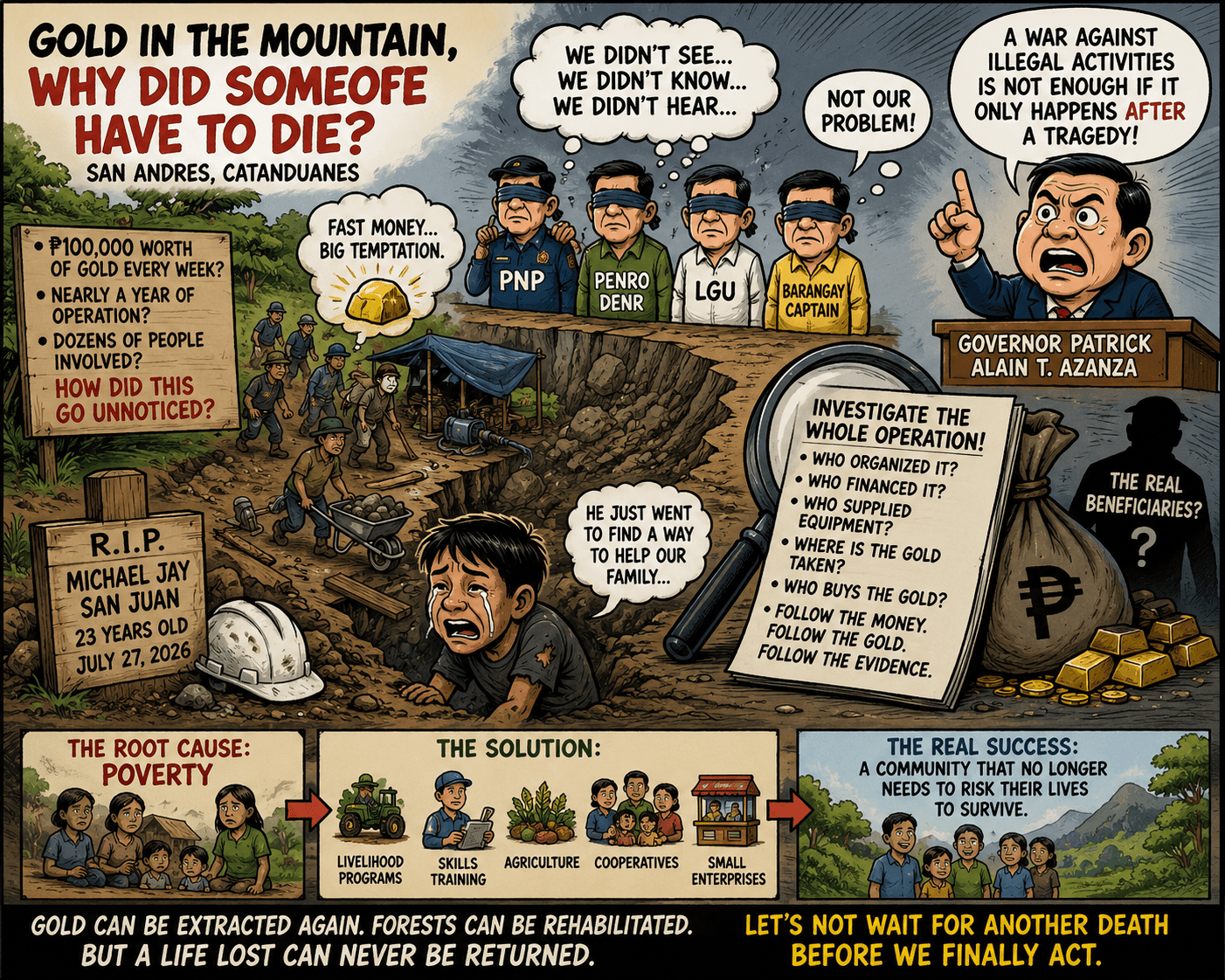
If the reported ₱100,000 worth of gold is being extracted and sold every week from a mining area in San Andres, Catanduanes, this is no longer a simple story of a few poor people searching for a livelihood. If the operation has reportedly been running for nearly a year and has grown to involve dozens of people, the government must ask a blunt question: How did this escape the attention of authorities for so long? This is not an invisible operation if people are moving in and out, equipment and supplies are being transported, gold is being extracted, and buyers are allegedly waiting for the product. If the operation is illegal, why was it allowed to continue? If it is legal, where are the permits and documents proving its legality? Silence is not an adequate answer.
The question became even more urgent after 23-year-old Michael Jay San Juan died when soil collapsed on him in Macacaw, Barangay San Isidro, on July 27, while another miner was injured. One life was lost in the search for gold. This is where the PNP, PENRO, DENR and local governments must do more than investigate the accident itself. They must investigate the entire operation. Who organized it? Who financed it? Who supplied the equipment? Where was the gold taken? Who bought it? If there are financiers or organizers, authorities must not stop with the people at the bottom of the pit. Follow the money. Follow the gold. Follow the evidence. But let us also be clear: rumors are not evidence, and anyone accused must be afforded due process.
Barangay governments also have a role. Barangay captains are closest to their communities and are often among the first to hear about unusual activities. That does not automatically make them responsible for illegal mining, but it gives them an important duty to report, coordinate and alert the proper authorities. Likewise, Governor Patrick Alain T. Azanza’s campaign against illegal activities must translate into continuous monitoring, intelligence gathering, enforcement and inter-agency coordination, not merely operations after tragedy strikes. If the alleged operation has existed for nearly a year, government must determine where the monitoring system failed. A “war against illegal mining” cannot succeed if government always arrives after someone has died. Prevention must come before tragedy.
But we must also confront the deeper root of the problem: poverty. Shutting down an illegal mine may be necessary if it is proven to violate the law, but that cannot be where government stops. If workers lose their source of income, they must be offered legitimate and sustainable alternatives—from abaca and agriculture to skills training, cooperatives, small enterprises and other livelihood opportunities suited to their communities. There is little value in closing one illegal mine today if hungry workers simply establish another one tomorrow in a different mountain. True success is not merely shutting down a mine; it is building a community where people no longer have to risk their lives simply to survive. Gold can be extracted again. Forests can perhaps be rehabilitated. But the life of Michael Jay San Juan cannot be restored. Let us not wait for another body to be pulled from another pit before we finally act.